
Neurofeedback Therapy in Vancouver

What Is Neurofeedback?
“Neurofeedback gives people a chance to change the way their brains are wired.”
— Bessel van der Kolk, MD, The Body Keeps the Score
Many people who come here have spent years trying to feel better—yet still feel stuck despite insight, effort, or therapy.
Neurofeedback is a gentle, neuroscience-based method that helps your brain shift out of patterns linked to anxiety, trauma, and nervous-system dysregulation.
During sessions, small sensors read your brain’s activity while the system responds in subtle ways that support stability and flexibility. Most people experience sessions as calm and settling.
Over time, the brain learns new rhythms that support clarity, emotional balance, and regulation. Neurofeedback has been studied for over 60 years and is used in clinical, research, and hospital settings worldwide.

In Short:
Neurofeedback helps the brain learn new, healthier patterns of regulation.
By working directly with brain activity, it supports calm, emotional balance, and resilience.
learn more
I am a Registered Clinical Counsellor (RCC) providing neurofeedback therapy in Vancouver as part of a trauma-informed, neuroscience-based approach that integrates somatic therapy, anxiety, trauma, and nervous-system dysregulation.
Neurofeedback is used clinically across hospital, research, and specialty treatment settings to support nervous-system regulation and functional brain stability.
This work integrates counselling with evidence-based brain training methods that support regulation at the level of neural function, helping improve sleep, attention, emotional stability, and stress recovery.
From a neuroscientific perspective, neurofeedback is a form of closed-loop brain training. EEG sensors measure real-time electrical activity in the brain, and that information is immediately reflected back to the system in subtle ways. When the brain shifts toward more stable, flexible, or regulated patterns, it receives feedback that allows those patterns to be reinforced.
Over repeated sessions, the brain adapts through neuroplasticity. Networks involved in attention, emotional regulation, arousal control, and stress response become more efficient and better coordinated. Rather than imposing an external state, neurofeedback allows the brain to learn how to regulate itself.
In anxiety and trauma, neural systems related to threat detection and survival often remain chronically over-activated or poorly synchronized. This can contribute to symptoms such as hypervigilance, sleep disturbance, emotional reactivity, shutdown, or difficulty recovering after stress. Neurofeedback works directly with these patterns at the level of brain activity, rather than relying only on cognitive strategies or verbal processing.
Unlike talk therapy, which primarily engages top-down processes such as reflection and meaning-making, neurofeedback supports bottom-up nervous-system regulation. This makes it particularly useful when symptoms are driven by physiological dysregulation, dissociation, or long-standing stress patterns that are difficult to shift through insight alone.
Decades of clinical and experimental research demonstrate that the brain can modify its own activity through feedback-based training. Neurofeedback has been studied across conditions including seizure disorders, attention regulation, trauma-related symptoms, and emotional dysregulation, providing a strong scientific foundation for its clinical use.
References
Sterman, M. B. (2000). Basic concepts and clinical findings in the treatment of seizure disorders with EEG operant conditioning. Clinical electroencephalography, 31(1), 45-55.
Kamiya, J. (1969). Operant control of the EEG alpha rhythm and some of its reported effects on consciousness. Altered states of consciousness, 519-529.
Sitaram, R., Ros, T., Stoeckel, L., Haller, S., Scharnowski, F., Lewis-Peacock, J., … & Sulzer, J. (2017). Closed-loop brain training: the science of neurofeedback. Nature Reviews Neuroscience, 18(2), 86-100.
Van der Kolk, B. A. (2014). The Body Keeps the Score. Viking.
🌿 What Neurofeedback Can Help With
- Anxiety & chronic stress — easing racing thoughts and hypervigilance
- Trauma & PTSD — calming and stabilizing the nervous system
- Depression — improving mood and energy
- Sleep difficulties — supporting deeper, more restorative rest
- Concussion & brain injury recovery — improving clarity, processing, and focus
- ADHD & learning challenges — enhancing attention and impulse control
- Nervous-system dysregulation — supporting emotional steadiness and state-shifting
learn more
Neurofeedback does not treat diagnoses in the way medication or symptom-based therapy often does. Instead, it works with underlying brain and nervous-system regulation patterns that contribute to symptoms across many conditions. For this reason, neurofeedback therapy in Vancouver is often used when symptoms reflect underlying nervous-system patterns rather than conscious thought processes.
From a neuroscience perspective, symptoms such as anxiety, hypervigilance, emotional reactivity, shutdown, poor sleep, or difficulty concentrating often reflect persistent dysregulation in neural networks responsible for arousal, threat detection, and state shifting. These patterns are functional, not psychological in origin — meaning the brain is doing what it has learned to do under prolonged stress, trauma, or neurological strain.
Common patterns seen in anxiety and trauma include:
- chronically elevated arousal and threat sensitivity
- difficulty shifting out of stress states
Because these patterns operate below conscious awareness, they are often resistant to insight-based or cognitive approaches alone. Neurofeedback works directly with the brain’s regulatory systems, helping them regain flexibility and stability over time.
This is why neurofeedback can be helpful across a wide range of presentations — including anxiety, trauma, sleep difficulties, post-concussion symptoms, emotional dysregulation, and attentional challenges — even when those symptoms look different on the surface. The common factor is how the brain is regulating itself, not the diagnostic label.
Clinically, this approach shifts the focus from “managing symptoms” to supporting nervous-system change at the level where symptoms are generated. As regulation improves, symptoms often soften as a downstream effect, which is why clinicians frequently recommend neurofeedback when dysregulation is driving symptoms rather than conscious thought patterns.
References
- Lanius, U. F., Paulsen, S. L., & Corrigan, F. M. (2014). Neurobiology and Treatment of Traumatic Dissociation. Springer.
- Porges, S. W. (2011). The Polyvagal Theory. Norton.
- Schore, A. N. (2012). The Science of the Art of Psychotherapy. Norton.
- Siegel, D. J. (2020). The Developing Mind. Guilford Press.
Why Neurofeedback Can Help When Other Approaches Haven’t
When symptoms persist despite understanding, it often means the nervous system is still operating in survival mode.
Neurofeedback works directly with brain systems that regulate arousal, stress, and emotional balance, supporting change at a physiological level.
For some, it becomes a primary treatment. For others, it stabilizes the nervous system so deeper therapeutic work can proceed more safely and effectively.
learn more
Many people seeking neurofeedback have already done meaningful therapeutic work. They may understand their history, recognize triggers, and have strong cognitive insight — yet still experience persistent anxiety, emotional reactivity, shutdown, or difficulty settling their nervous system.
From a neurobiological perspective, this is not a failure of therapy or effort. It reflects the fact that many trauma- and anxiety-related symptoms are generated below the level of conscious thought, within subcortical and autonomic brain systems responsible for arousal, threat detection, and state regulation.
Talk therapy primarily engages top-down cortical processes — reflection, meaning-making, emotional labeling, and relational insight. These are valuable capacities, but they do not directly retrain dysregulated neural networks that continue to operate automatically under stress. When bottom-up systems remain biased toward threat or instability, symptoms can persist even in the presence of insight.
Neurofeedback works differently. It engages the brain at the level where regulation is actually organized, supporting:
- stabilization of arousal systems
- improved coordination between regulatory and emotional networks
- increased flexibility in shifting between states
Rather than asking the person to consciously regulate or override symptoms, neurofeedback allows the brain to experience and learn regulation directly. Over time, this learning becomes implicit — meaning calmer, more stable states become more accessible without effort.
Clinically, this explains why neurofeedback is often helpful when:
- anxiety feels “hard-wired” or automatic
- emotional regulation collapses under stress
- dissociation or shutdown interrupts therapeutic work
- progress in therapy plateaus despite strong engagement
Neurofeedback does not replace psychotherapy. Instead, it can support the physiological conditions that make therapeutic work more effective—so insight, emotional processing, and relational repair can happen within a more regulated nervous system. This is why neurofeedback therapy in Vancouver is often integrated when strong insight is present but physiological symptoms remain.
References
- Porges, S. W. (2011). The Polyvagal Theory. W. W. Norton & Company.
- Schore, A. N. (2012). The Science of the Art of Psychotherapy. W. W. Norton & Company.
- Siegel, D. J. (2020). The Developing Mind. Guilford Press.
- van der Kolk, B. A. (2014). The Body Keeps the Score. Viking.
Curious whether neurofeedback might help you?
⚡ Direct Neurofeedback (LENS)
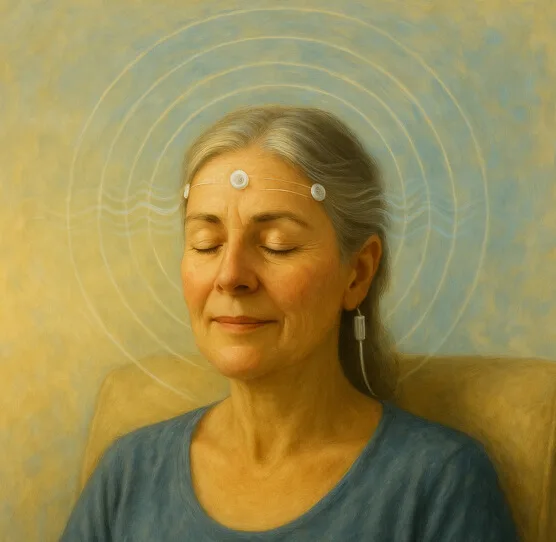
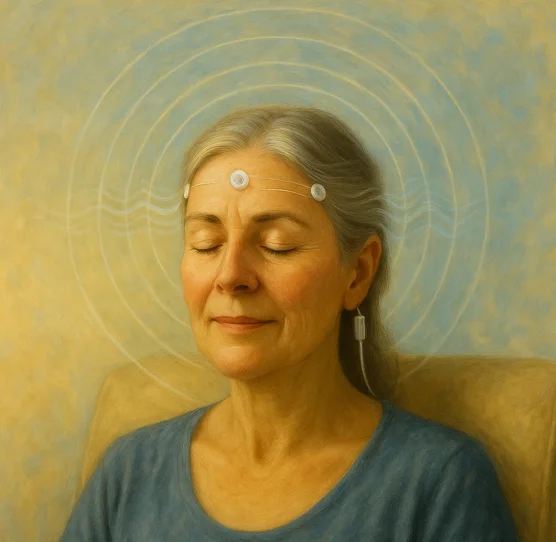
During sessions, small sensors are placed on your scalp while you rest quietly with your eyes closed. The system sends brief signals to your brain in response to its real-time activity.
Shifts toward nervous-system regulation during or after sessions are common. For some people, these changes are longer-lasting; for others, they are more temporary.
Within the first few sessions, we can usually determine whether Direct Neurofeedback will play a meaningful role in our work together.
In Short:
Direct Neurofeedback can shift the nervous system toward calm and relaxation.
The duration of this effect varies between individuals.
learn more
Direct Neurofeedback—also known as LENS or IASIS—is used clinically when the nervous system appears locked into rigid stress or trauma patterns. It is a form of ultra-low-intensity microcurrent neurofeedback that interacts with the brain’s activity in real time. Unlike learning-based neurofeedback, it does not train the brain toward a target pattern through repetition or reward.
Instead, very brief microcurrent signals are delivered based on moment-to-moment EEG activity. These signals are extremely low intensity—typically a small fraction of the electromagnetic exposure from everyday devices such as cell phones—and are not intended to impose a new pattern on the brain.
Rather, they introduce a transient perturbation that can interrupt rigid or maladaptive neural firing, allowing the brain to reorganize its activity more flexibly.
This approach is often used clinically when the nervous system appears stuck in high-gain threat responses, trauma-related loops, or chronic stress activation. By momentarily disrupting these entrenched patterns, Direct Neurofeedback may facilitate shifts in arousal, tension, or emotional state.
How Direct Neurofeedback Differs From Learning-Based Neurofeedback
Most forms of neurofeedback operate through operant conditioning. In those approaches, the brain gradually learns to stabilize or optimize specific activity patterns through repeated reinforcement. This learning process supports cumulative, durable neuroplastic change over time.
Direct Neurofeedback does not operate through learning or conditioning. It does not reinforce target frequencies or coherence patterns, does not rely on repetition to encode new skills, and does not produce predictable cumulative effects in the way learning-based neurofeedback does.
Because it does not involve learning, response duration varies widely. Some individuals experience sustained symptom reduction, while others experience shorter-term state shifts that are clinically useful but not long-lasting on their own.
Determining Clinical Fit and Response Pattern
Clinical response to Direct Neurofeedback varies between individuals. Some people experience brief shifts in nervous-system state that are most useful as short-term regulation or support during periods of heightened stress. Others notice changes that persist for days or weeks and meaningfully alter baseline symptoms.
Because Direct Neurofeedback does not rely on gradual learning through repetition, its role cannot be predicted in advance. Instead, suitability is determined empirically through early session response. Changes in arousal, emotional regulation, sleep, or overall nervous-system stability during the first few sessions guide whether this approach will remain central, be used episodically, or be integrated alongside learning-based neurofeedback.
In my practice, Direct Neurofeedback is used selectively and responsively. When it produces meaningful and sustained improvement, it may become a core part of treatment. When its effects are more transient, it can still play a valuable role in calming the nervous system and creating the conditions for deeper therapeutic or neuroplastic work to proceed safely.
References
- Duke, G., Yotter, C. N., Sharifian, B., & Petersen, S. (2024). Effectiveness of microcurrent neurofeedback on depression, anxiety, PTSD, and quality of life. Journal of the American Association of Nurse Practitioners, 36(2), 100–109.
- Larsen, S., Harrington, M., & Hicks, D. (2006). The LENS (Low Energy Neurofeedback System): A clinical outcomes study on one hundred patients. Journal of Neurotherapy, 10(2–3), 69–78.
🔗 Connectivity (Coherence-Based) Neurofeedback

“Healing means creating new connections — both in the brain and in our relationships.”
— Daniel J. Siegel, MD, The Developing Mind
Connectivity (coherence-based) neurofeedback focuses on how different regions of the brain communicate with one another.
When brain networks become more coordinated, this supports overall brain health, calm, flexibility, and emotional balance.
Sessions are gentle and relaxing. Small sensors read your brain’s activity while you watch a screen. Visual and auditory feedback helps encourage your brain to move into healthier patterns.
This form of neurofeedback is typically completed over a series of sessions, supporting more durable, long-term brain and nervous-system change.
In Short:
Training occurs over a series of sessions and is designed to support lasting brain and nervous system change.
learn more
Connectivity (coherence-based) neurofeedback works at the level of brain networks, training how multiple regions coordinate timing, phase relationships, and communication. Anxiety, trauma, concussion symptoms, and chronic dysregulation are increasingly understood as network-level disturbances rather than isolated regional deficits, making coherence-based approaches particularly relevant for durable nervous-system change.
Brain function depends not only on activity within individual regions, but on precise timing and synchronization across distributed networks. When coherence is disrupted, the brain’s ability to shift states, integrate emotion, and regulate arousal becomes constrained. This can manifest as persistent hypervigilance, emotional instability, shutdown, or difficulty recovering from stress.
Connectivity neurofeedback directly targets these timing relationships. Multiple EEG sensors record activity simultaneously across regions, while training algorithms assess temporal synchrony, phase alignment, and multivariate coherence — measures that reflect how efficiently networks communicate. Real-time visual or auditory feedback is provided based on whether inter-regional timing moves toward statistically optimal ranges, allowing the brain to explore and stabilize healthier coordination patterns through neuroplastic adaptation.
A key advance in this field is the work of Dr. Rob Coben, whose research on multivariate coherence neurofeedback has significantly shaped contemporary connectivity-based training. His 4-channel multivariate approach evaluates multiple regions simultaneously, identifies network hubs rather than isolated connections, and prioritizes coherence deviations most likely to constrain overall network regulation. Published research demonstrates that this method produces stronger coherence learning, more robust frequency normalization, and more durable neuroplastic change than traditional pairwise coherence approaches.
In my practice, all QEEG brain maps are analyzed by Dr. Coben. His interpretation identifies the specific coherence patterns most relevant for each individual and directly informs the selection of training targets. By focusing on key network bottlenecks revealed through QEEG analysis, connectivity neurofeedback is applied in a precise, data-driven manner that supports efficient and clinically targeted regulation.
References
Coben, R., & Myers, T. E. (2010). The relative efficacy of connectivity guided and symptom based EEG biofeedback for autistic disorders. Applied psychophysiology and biofeedback, 35(1), 13-23.
Coben, R., Middlebrooks, M., Lightstone, H., & Corbell, M. (2018). Four channel multivariate coherence training: development and evidence in support of a new form of neurofeedback. Frontiers in Neuroscience, 12, 729.
Siegel, D. J. (1999). The Developing Mind. Guilford Press.
Thatcher, R. W. (2012). Coherence, phase differences, phase shift, and phase lock in EEG/ERP analyses. Developmental neuropsychology, 37(6), 476-496..
🧠 Brain Mapping (QEEG)
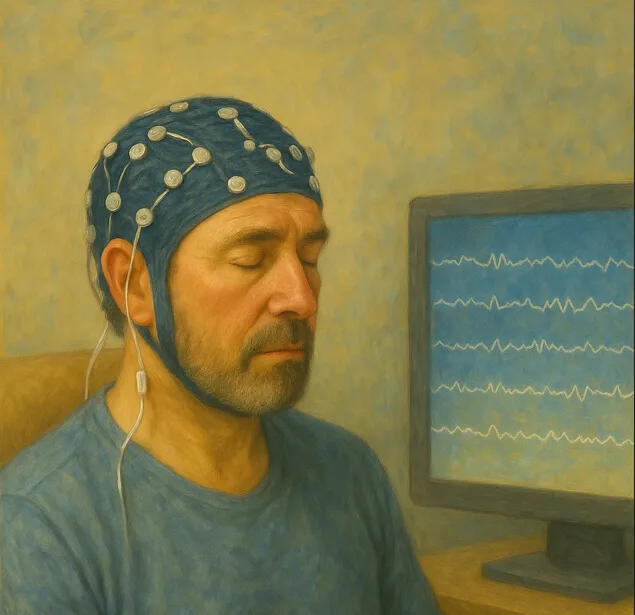
The data reveal how efficiently different regions communicate and which patterns may be contributing to anxiety, trauma, emotional dysregulation, or related symptoms.
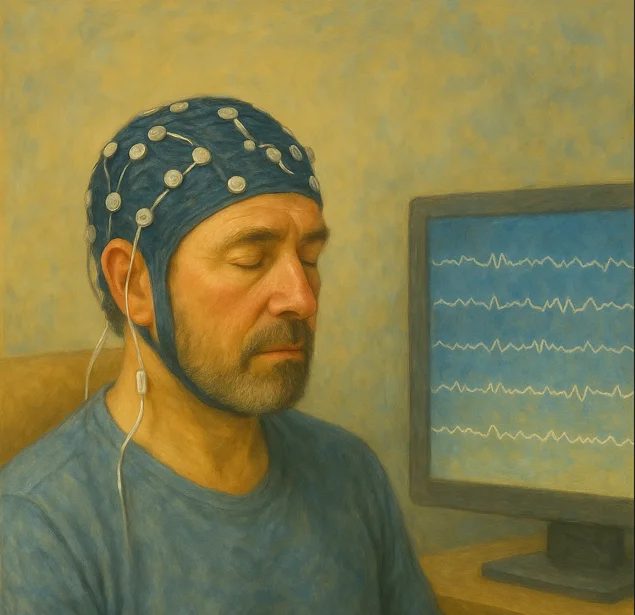
During an in-office appointment, you’ll wear a comfortable cap with sensors that record your brain’s electrical activity.
These recordings are analyzed by Dr. Rob Coben—a leading expert in connectivity-based neurofeedback—providing a detailed picture of your brain’s communication networks.
In Short:
A brain map offers a clear, objective picture of how your brain communicates. This allows us to design a neurofeedback plan that is personalized, data-driven, and scientifically grounded.
learn more
From a scientific standpoint, QEEG analyzes EEG signals using statistical modeling to identify patterns of neural activity that deviate from expected norms. These deviations may involve:
- excessive or reduced activation in specific frequency bands
- inefficient communication between regions
- altered timing or synchronization across networks
Such patterns are commonly associated with anxiety, trauma-related dysregulation, attention difficulties, emotional reactivity, or reduced cognitive flexibility.
A full QEEG assessment uses multi-channel EEG recordings to evaluate:
- spectral power (how active different frequencies are)
- coherence and connectivity (how regions communicate)
- phase timing (how well neural signals are coordinated)
- network efficiency and stability
Importantly, QEEG does not diagnose psychiatric conditions. Instead, it identifies functional brain patterns that may be contributing to symptoms. This allows neurofeedback training to be guided by measurable physiology rather than trial-and-error or symptom guessing.
In this practice, all QEEG recordings are analyzed by Dr. Rob Coben, a leading researcher in connectivity-based neurofeedback. His analysis focuses on identifying the specific network-level deviations that are most likely to limit regulation, flexibility, and recovery. These findings guide the selection of individualized neurofeedback protocols that target the most relevant neural bottlenecks rather than attempting to train everything at once.
Clinically, QEEG-guided neurofeedback offers several advantages:
- training is individualized rather than generic
- targets are grounded in objective data
- network-level disturbances can be addressed directly
- progress can be monitored over time
By clarifying how the brain is organized before training begins, QEEG helps ensure that neurofeedback is precise, efficient, and aligned with each person’s unique nervous-system profile.
References
- Duffy, F. H., Hughes, J. R., Miranda, F., Bernad, P., & Cook, P. (1994). Status of quantitative EEG (QEEG) in clinical practice, 1994. Clinical Electroencephalography, 25(4), vi-xxii.
- John, E. R., Prichep, L. S., Fridman, J., & Easton, P. (1988). Neurometrics: computer-assisted differential diagnosis of brain dysfunctions. Science, 239(4836), 162-169.
- Nuwer, M. (1997). Assessment of digital EEG, quantitative EEG, and EEG brain mapping: Report of the American Academy of Neurology and the American Clinical Neurophysiology Society*[RETIRED]. Neurology, 49(1), 277-292.
- Thatcher, R. W. (2010). Validity and reliability of quantitative electroencephalography. Journal of neurotherapy, 14(2), 122-152.
Meet Your Therapist

Adam Bradley Saunders
Registered Clinical Counsellor (RCC)
M.Ed. Counselling Psychology
Somatic Experiencing® Practitioner (SEP)
I’ve been practicing neurofeedback since 2016 and have trained across several approaches, including Direct Neurofeedback (LENS), Infra-Slow Frequency neurofeedback (developed by Mark Smith), sLORETA neurofeedback, and multivariate coherence training with Dr. Rob Coben. I now specialize in Direct (LENS) and connectivity-based neurofeedback (coherence training), which I’ve found most effective for supporting nervous system regulation.
Alongside neurofeedback, I bring over 20 years of clinical experience, with advanced training in Somatic Experiencing® and Deep Brain Reorienting. These approaches guide how I assess readiness, pacing, and nervous-system safety.
“Through my own healing from anxiety and complex trauma, I know that lasting change is possible. I aim to create a relationship of trust, authenticity, and emotional safety, where we gently and skillfully work with your body’s innate capacity to heal.”
FAQs About Neurofeedback
Hidden FAQ
Is neurofeedback safe?
Yes. Neurofeedback has been used safely for more than 60 years. It is gentle, non-invasive, and easy on the nervous system. A small number of people may feel mildly tired or activated afterward—simply reflecting the brain’s learning process. When this occurs let me know and we will adjust session timing or intensity accordingly.
Is neurofeedback scientifically supported?
Absolutely. Neurofeedback is backed by decades of peer-reviewed research across anxiety, trauma, ADHD, concussion recovery, sleep difficulties, and emotional regulation.
Highlights include:
- Foundational studies in the 1960s (Kamiya, Sterman)
- Thousands of clinical studies across multiple conditions
- ADHD meta-analyses showing outcomes comparable to stimulant medication
Although neurofeedback lacks pharmaceutical funding, its evidence base continues to grow, supported by universities, clinics, and modern QEEG technology.
How many neurofeedback sessions do people usually need?
- First 5 sessions: subtle shifts—calmer mood, better sleep, less overwhelm
- 15–20 sessions: noticeable improvements in anxiety, trauma symptoms, focus, emotional regulation
- 30–50 sessions: deeper, more lasting change
Some clients choose occasional boosters afterward.
How often should I come for neurofeedback?
- Twice weekly → fastest and most stable results
- Once weekly → steady but slower progress
- Less frequent → more often ineffective
Sessions last 30–40 minutes and are gentle on the system.
Can neurofeedback be combined with therapy or medication?
With therapy:
Neurofeedback often creates the internal stability needed for deeper trauma or somatic work. Emotional processing becomes easier when the nervous system is regulated.
With medication:
Some clients notice they need less medication over time. Any changes must be coordinated with your prescriber.
Ready to Explore Neurofeedback in Vancouver?

Discuss whether neurofeedback can be helpful for you.
No commitment — just a conversation.
Scientific & Clinical References
View all references
Coben, R., & Myers, T. E. (2010). The relative efficacy of connectivity guided and symptom based EEG biofeedback for autistic disorders. Applied Psychophysiology and Biofeedback, 35(1), 13–23.
Coben, R., Middlebrooks, M., Lightstone, H., & Corbell, M. (2018). Four channel multivariate coherence training: Development and evidence in support of a new form of neurofeedback. Frontiers in Neuroscience, 12, 729.
Duffy, F. H., Hughes, J. R., Miranda, F., Bernad, P., & Cook, P. (1994). Status of quantitative EEG (QEEG) in clinical practice, 1994. Clinical Electroencephalography, 25(4), vi–xxii.
Duke, G., Yotter, C. N., Sharifian, B., & Petersen, S. (2024). Effectiveness of microcurrent neurofeedback on depression, anxiety, PTSD, and quality of life. Journal of the American Association of Nurse Practitioners, 36(2), 100–109.
John, E. R., Prichep, L. S., Fridman, J., & Easton, P. (1988). Neurometrics: Computer-assisted differential diagnosis of brain dysfunctions. Science, 239(4836), 162–169.
Kamiya, J. (1969). Operant control of the EEG alpha rhythm and some of its reported effects on consciousness. In Altered States of Consciousness (pp. 519–529).
Lanius, U. F., Paulsen, S. L., & Corrigan, F. M. (2014). Neurobiology and Treatment of Traumatic Dissociation. Springer.
Larsen, S., Harrington, M., & Hicks, D. (2006). The LENS (Low Energy Neurofeedback System): A clinical outcomes study on one hundred patients. Journal of Neurotherapy, 10(2–3), 69–78.
Nuwer, M. (1997). Assessment of digital EEG, quantitative EEG, and EEG brain mapping: Report of the American Academy of Neurology and the American Clinical Neurophysiology Society [RETIRED]. Neurology, 49(1), 277–292.
Porges, S. W. (2011). The Polyvagal Theory. W. W. Norton & Company.
Schore, A. N. (2012). The Science of the Art of Psychotherapy. W. W. Norton & Company.
Siegel, D. J. (1999). The Developing Mind. Guilford Press.
Siegel, D. J. (2020). The Developing Mind (2nd ed.). Guilford Press.
Sitaram, R., Ros, T., Stoeckel, L., Haller, S., Scharnowski, F., Lewis-Peacock, J., … Sulzer, J. (2017). Closed-loop brain training: The science of neurofeedback. Nature Reviews Neuroscience, 18(2), 86–100.
Sterman, M. B. (2000). Basic concepts and clinical findings in the treatment of seizure disorders with EEG operant conditioning. Clinical Electroencephalography, 31(1), 45–55.
Thatcher, R. W. (2010). Validity and reliability of quantitative electroencephalography. Journal of Neurotherapy, 14(2), 122–152.
Thatcher, R. W. (2012). Coherence, phase differences, phase shift, and phase lock in EEG/ERP analyses. Developmental Neuropsychology, 37(6), 476–496.
Van der Kolk, B. A. (2014). The Body Keeps the Score. Viking.
A more extensive list of scientific and clinical references supporting this work can be found here: