
Somatic Therapy in Vancouver
Healing Anxiety, Trauma & the Nervous System

Feeling overwhelmed by anxiety or trauma?
You’re not alone—and you don’t have to stay stuck.
In my practice, I offer body-based, trauma-informed therapy that works directly with your nervous system to restore regulation, safety, and resilience—supporting deep, lasting change rather than short-term symptom relief.
learn more
I am Adam Bradley Saunders, M.Ed., RCC, a Registered Clinical Counsellor and Somatic Experiencing Practitioner with over 20 years of clinical experience supporting adults with anxiety, trauma, and nervous system dysregulation in Vancouver and across British Columbia.
My work is grounded in contemporary neuroscience and trauma research, with a primary focus on how chronic stress and traumatic experiences alter autonomic regulation, threat perception, and implicit memory systems in the brain and body. From a clinical perspective, lasting change does not occur through insight alone, but through restoring the nervous system’s capacity to detect safety, complete interrupted survival responses, and re-establish flexible regulation.
Somatic therapy is a body-based form of psychotherapy informed by neuroscience, attachment theory, and trauma research. Clinical evidence shows that lasting emotional change depends not only on insight, but on the nervous system’s ability to move out of chronic survival states and into regulation and safety.
When anxiety or trauma is present, the nervous system may remain stuck in patterns of hyperarousal (fight or flight) or shutdown (freeze or collapse). In these states, traditional talk therapy can sometimes reinforce overwhelm rather than resolve it. Somatic therapy works directly with physiological regulation, helping restore the conditions needed for emotional processing, learning, and integration.
This approach is widely used in trauma-informed therapy and anxiety therapy because it supports bottom-up nervous system change. By working with sensation, movement, impulse, and present-moment awareness, somatic therapy helps the brain and body update threat responses—allowing symptoms to soften at their root rather than being managed cognitively.
In my practice, I integrate evidence-based approaches such as Somatic Experiencing®, Deep Brain Reorienting (DBR), attachment-focused therapy, and neurofeedback. Together, these methods support nervous system regulation, trauma recovery, and a deeper sense of safety and connection in the body.
References
- Levine, P. A. (2010). In an unspoken voice: How the body releases trauma and restores goodness. North Atlantic Books.
- Porges, S. W. (2011). The polyvagal theory: Neurophysiological foundations of emotions, attachment, communication, and self-regulation. W. W. Norton & Company.
- van der Kolk, B. A. (2014).The body keeps the score: Brain, mind, and body in the healing of trauma. Viking.
Want to Go Deeper Than Talk Therapy?

If you’ve already tried talk therapy, read the books, and built self-awareness—but still find yourself anxious, overwhelmed, or stuck in familiar patterns—you’re not alone. Many of my clients arrive feeling exactly this way.
This doesn’t mean your system is broken.
Your nervous system learned how to protect you—and with the right conditions, it also knows how to heal.
Somatic therapy works by helping you tune into sensations, emotions, and nervous system responses, not just thoughts.
This body-based approach helps your system safely process unresolved stress and trauma—creating the kind of deep, lasting change that insight alone often can’t reach.
learn more
Mechanism
Somatic therapy works directly with the autonomic nervous system — the system responsible for threat, safety, and emotional regulation. When the nervous system remains in survival mode, cognitive insight alone often cannot create lasting change.
Clinical implication
Trauma and chronic stress are frequently stored as procedural and sensory memory rather than narrative memory. Without nervous system regulation, attempts to “process” experiences can increase overwhelm, dissociation, or shutdown.
Why this matters
This is why somatic therapy prioritizes safety, pacing, and present-moment awareness — creating the physiological conditions needed for integration rather than re-traumatization.
🔗 Learn More → What Is Somatic Therapy
🔗 Learn More → Trauma Therapy in Vancouver
References
Van der Kolk, B. A. (2014).The Body Keeps the Score.
Porges, S. W. (2011). The Polyvagal Theory.
Explore by Concern
Anxiety
🔗 Learn More → Anxiety Therapy in Vancouver
Trauma & PTSD
🔗 Learn More → Trauma & PTSD Therapy in Vancouver
Car Accident / ICBC
🔗 Learn More → ICBC & Car Accident Trauma Therapy
What Clients Are Saying

“A fantastic therapist. A true healer.”
— Lena W., Calgary
“Adam has an incredibly compassionate approach to my struggles. His work as my counsellor literally saved my life.”
— Christian B., Vancouver
“I have never felt very safe or relaxed with anyone until I met Adam. His steady presence allows me to engage fully in deeply embodied somatic work.”
— Janet R., Port Moody
What Somatic Therapy Can Help With
- Anxiety and panic attacks
- Chronic stress and burnout
- Nervous system dysregulation
- Physical symptoms linked to stress (fatigue, tension, digestive issues)
- Sleep difficulties & Insomnia
- Trauma and PTSD
- Emotional numbness or dissociation
- Grief, overwhelm, or suppressed emotions
- Anger, boundaries, and assertiveness
- Relationship and attachment patterns
learn more
Clinical fit
Somatic therapy is often helpful for adults experiencing anxiety, trauma, chronic stress, emotional overwhelm, dissociation, or physical symptoms linked to prolonged nervous system activation. Many people seek this approach after insight-oriented therapy has helped them understand their patterns, yet symptoms continue to show up at a bodily or emotional level.
Why pacing and readiness matter
Because somatic therapy works with implicit and physiological processes, careful pacing and stabilization are essential. Treatment is guided by present-moment capacity rather than intensity, with an emphasis on safety, regulation, and collaboration. This is especially important for individuals with complex trauma histories or long-standing nervous system dysregulation.
When additional support may be needed
In situations involving higher levels of risk — such as acute crisis, significant instability, active substance dependence, or when medical or psychiatric care is required — depth-oriented somatic trauma work is often not the first step.
In these cases, the priority is stabilization. This may include strengthening regulation skills, increasing day-to-day safety, coordinating with medical or psychiatric providers, and in some cases incorporating neurofeedback to support baseline nervous system regulation.
Once sufficient stability is in place, deeper somatic processing can become both safer and more effective.
Clinical stance
Somatic therapy is not a one-size-fits-all approach. The approach, pacing, and methods are always individualized, informed by ongoing assessment, and adjusted to support safety, effectiveness, and long-term integration.
How I Work
Meet Your Somatic Therapist
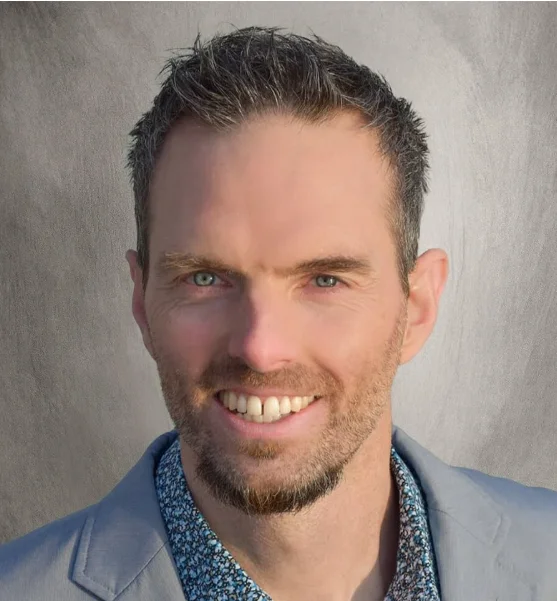
Adam Bradley Saunders
Registered Clinical Counsellor (RCC)
M.Ed. Counselling Psychology
Somatic Experiencing® Practitioner (SEP)
This dual path has given me both advanced professional training and a lived trust in the power of somatic and experiential therapies — knowing them not just in theory, but in my own body.
My clinical training includes:
Somatic Experiencing® (SE)
Deep Brain Reorienting (DBR)
Neurofeedback
EMDR

Rather than relying on a single method, I draw from these approaches and adjust the work based on your preferences and how your nervous system responds.
“Through my own healing from anxiety and complex trauma, I know that lasting change is possible. I aim to create a relationship of trust, authenticity, and emotional safety, where we gently and skillfully work with your body’s innate capacity to heal.”
Start Your Somatic Therapy Journey

No commitment—just a conversation.
Clinical & Scientific Foundations
- Bessel van der Kolk — The Body Keeps the Score
- Gabor Maté — When the Body Says No
- Peter Levine — Waking the Tiger
- Stephen Porges — The Polyvagal Theory
View all references
Corrigan, F. M., Young, H., & Christie-Sands, J. (2024). Deep Brain Reorienting: Understanding the Neuroscience of Trauma, Attachment Wounding, and DBR Psychotherapy. Taylor & Francis.
Kearney, B. E., Corrigan, F. M., Frewen, P. A., Nevill, S., Harricharan, S., Andrews, K., Jetly, R., McKinnon, M. C., & Lanius, R. A. (2023). A randomized controlled trial of Deep Brain Reorienting: A neuroscientifically guided treatment for post-traumatic stress disorder. European Journal of Psychotraumatology, 14(2), 2240691.
Kabat-Zinn, J. (1990). Full catastrophe living. Delacorte.
Levine, P. A. (1997). Waking the tiger: Healing trauma: The innate capacity to transform overwhelming experiences. North Atlantic Books.
Levine, P. A. (2010). In an unspoken voice: How the body releases trauma and restores goodness. North Atlantic Books.
Lanius, R. A., Bluhm, R. L., & Frewen, P. A. (2011). How understanding the neurobiology of complex post‐traumatic stress disorder can inform clinical practice: A social cognitive and affective neuroscience approach. Acta Psychiatrica Scandinavica, 124(5), 331-348.
Maté, G. (2003). When the body says no: The cost of hidden stress. Vintage Canada.
Porges, S. W. (2011). The polyvagal theory: Neurophysiological foundations of emotions, attachment, communication, and self-regulation. W. W. Norton & Company.
Rothschild, B. (2000). The body remembers: The psychophysiology of trauma and trauma treatment (Vol. 1). W. W. Norton.
Schore, A. N. (2012). The science of the art of psychotherapy: The Latest work from a pioneer in the study of the development. WW Norton & Company.
Van der Kolk, B. A. (2014). The body keeps the score: Brain, mind, and body in the healing of trauma. Viking.
A more extensive list of scientific and clinical references supporting this work can be found here: